
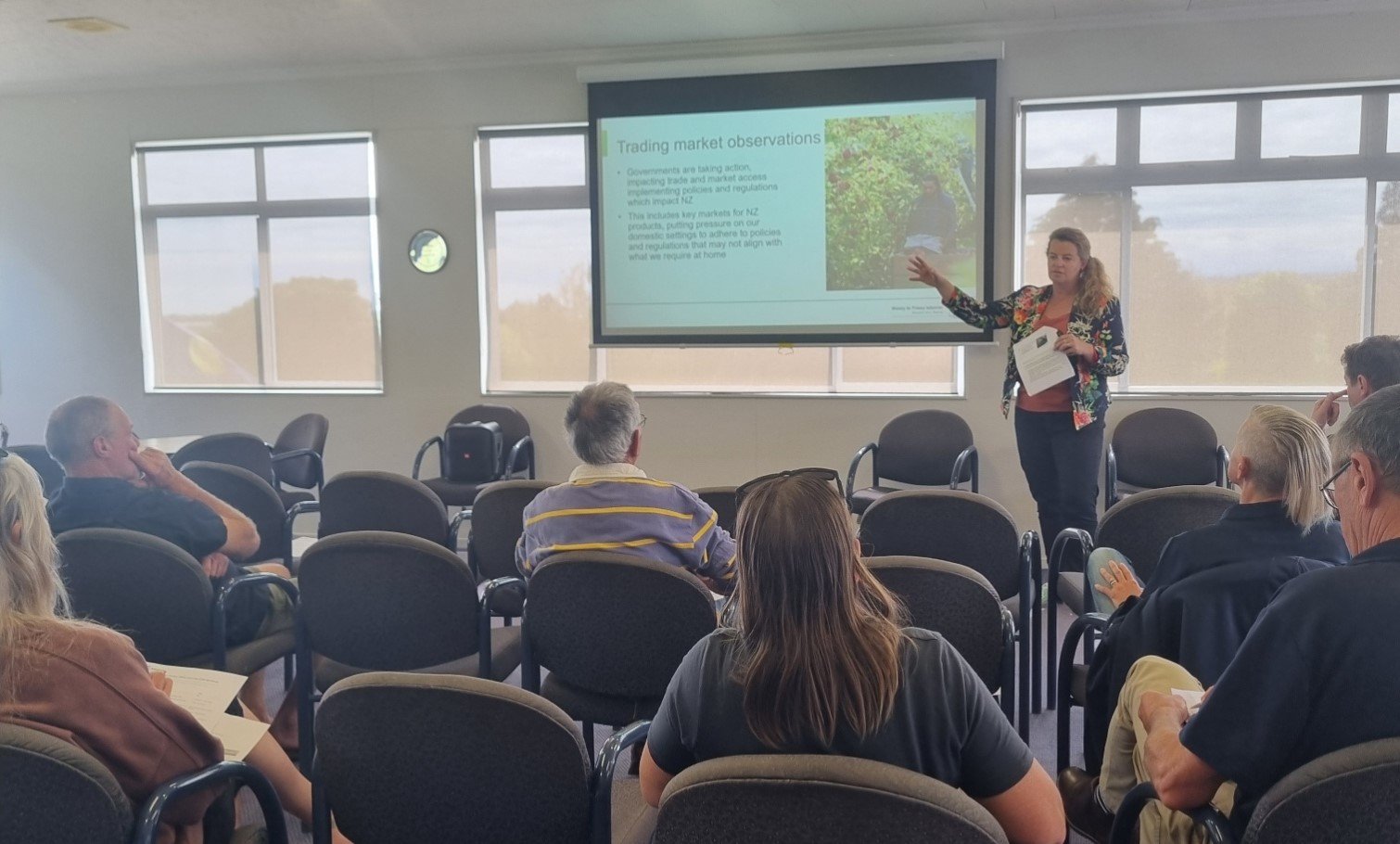
As part of our Integrated Farm Planning seminars, we recently hosted two sessions—one in Ōpōtiki and one in Whakatāne—focusing on Market-Driven Greenhouse Gas (GHG) emissions and the Emissions Trading Scheme (ETS). Initially, these seminars were intended to address GHG regulations, but with those still unconfirmed, we shifted the focus to market drivers across key sectors and their impact on farmers and growers.
The seminars began with a presentation from MPI and industry sector leaders, which provided insights into international market trends and their implications for New Zealand. This was followed by Te Uru Rākau, who delivered clear, practical guidance on how the ETS could offer benefits to participants and their families. Toitū Envirocare concluded the sessions with valuable advice on sustainability practices for farms and orchards, including inspiring case studies of businesses leading the way in reducing emissions.
Key Themes and Insights
One recurring theme emerged across industry group presentations from the Meat Industry Association, Fonterra, and Zespri: “Scope 3” emissions. International food retailers and service providers are increasingly demanding transparency and sustainability throughout the supply chain, including the origins of the food itself—be it animal or plant.
To meet these expectations, industry groups are aligning their regulations and emissions targets with those of large international companies, which are pursuing their own sustainability goals and deadlines. These targets are not just driven by compliance but also by market access, ensuring New Zealand products remain competitive and desirable in the global marketplace.
This demand extends beyond food producers, as financial and investment institutions are also factoring sustainability and greenhouse gas emissions into their lending and investment decisions.
MPI’s Global Perspective.
MPI’s presentation emphasised how international governments are driving change through policies and regulations that influence global trade and market access. Key markets for New Zealand products are implementing sustainability measures for greenhouse gas emissions that, in turn, exert pressure on domestic practices, often requiring adjustments to meet these external demands.
New Zealand remains committed to building sustainable, resilient food systems that:
- Deliver accessible, nutritious food;
- Foster rewarding livelihoods.
- Enable thriving rural communities;
MPI highlighted the importance of global cooperation in ensuring that multilateral systems support the transition to more sustainable food production, balancing international expectations with domestic needs. In summary, international markets are driving the need for NZ’s primary industry to measure and reduce greenhouse gas emissions.
Read about our other seminars and field days here:
- Biodiversity Seminar
- Biodiversity on farms field day
- Biodiversity on orchards field day
- Soil Management
Mel Brown – Project Coordinator