
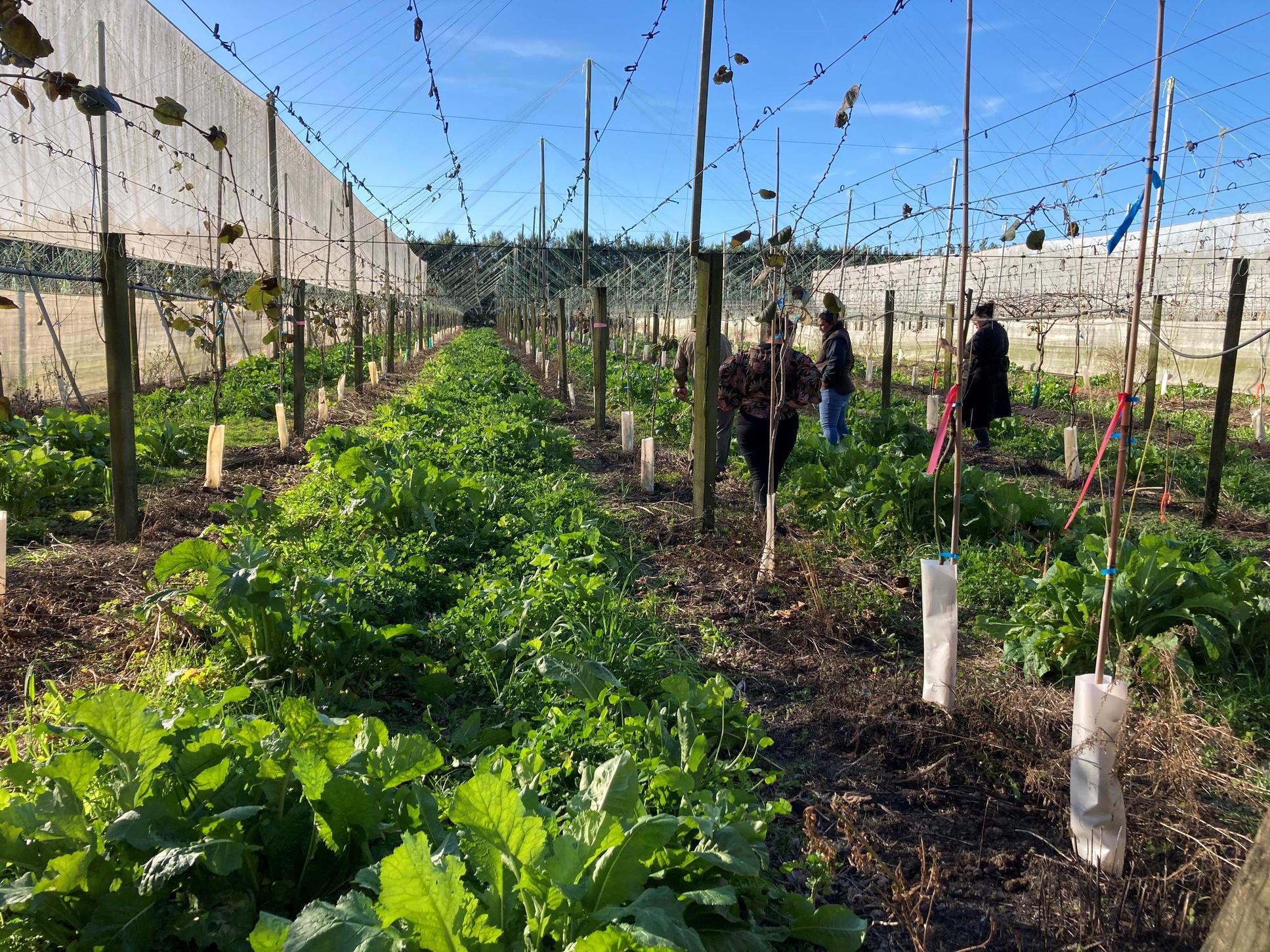
On 5th June 2024 Allegrow held a field day at Whiritoa Orchard as part of the Integrated Farm Planning Series. The orchard is owned by Maōri Investments Limited and managed by the very humble but knowledgeable and passionate Helen Scott. There are two orchards on the property, one is certified organic and one is conventional.
Helen gave us a magnificent tour of the orchard, pointing out some steps they have taken to improve biodiversity. These steps can be carried out in some shape or form on most orchards by thinking outside the ‘riparian margin’ box and considering other options for biodiversity. Habitats for pollinating insects and native birds are being developed. Historical views of these being undesirable in the orchard are being challenged in favour of the symbiosis of nature with the orchard activities.
The organic orchard includes a native shelter belt, this includes plants such as a mixture of various species of pittosporums, titoki, karamu, manuka and kanuka. If required, the shelter belt can be sprayed with pyrethrum to control passion vine hopper and other pests. The native shelter belt is a good early indicator for pests and diseases, which is particularly useful in the organic orchard. Rongoa or medicinal species can be included in the shelter belt too, for example kawakawa or manuka.
For orchards with a pond area, this area can be planted with native species. At the Whiritoa Orchard the pond is planted with grasses such as carex, native lily renga renga and the small koromiko shrub. These species encourage pollinating insects, bees and bird life. While some orchards discourage birds, the objective on this orchard is to encourage native birds year around so as to provide competition for the non-native birds that damage early bud growth.
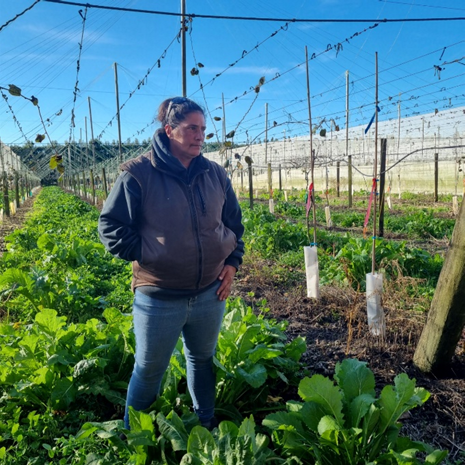

Different groundcover/pasture species are being trialled between the kiwifruit rows. In the organic orchard, clover is being trialled. Observations suggest that the bees move between the kiwifruit flowers and the clover flowers and Helen likens this to providing a salad for the bees instead of just boring old lettuce. Bees are less likely to go looking for a more appetising selection elsewhere and will be attracted from other areas.
The conventional orchard suffered immensely during and after the recent adverse weather events as a result of being saturated with water for a long period of time. A significant proportion of the kiwifruit plants are being replaced. To improve the soil drainage and structure for the new plants naturally and sustainably a diverse crop has been planted between the rows. The species include plants with large tap roots like chicory, daikon and plantain. Once the canopy closes in, the species suited to shadier conditions will remain. The objective is to provide conditions where mycelia and soil biodiversity are abundant.
While Helen makes creating opportunities for creating biodiversity in the orchard seem effortless and easy, you can tell a lot of time and thought has gone into this. Helen credits a lot of the biodiversity success on the orchard to ‘just giving stuff a go’. These concepts are the perfect small steps for any orchard to implement – just give it a go.
You can read about biodiversity on farms here
Lilian Harley – Director